
A Linux Foundation Project
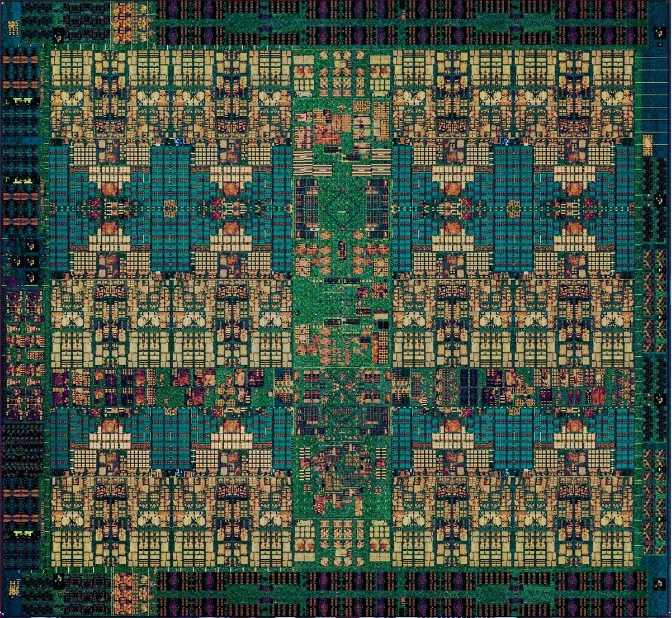
OpenPOWER processor die

Why OpenPOWER?

OpenPOWER enables sovereign AI infrastructure, open silicon design, and full hardware auditability — for regulated industries, governments, universities, chip designers, and enterprise software teams.

Built for
Regulated Industries
Sovereign Programs
Open Silicon
OpenPOWER Processor Die
Financial Services · Healthcare · Defense · Energy

The Business Case for Funding Open AI Infrastructure

Your organization is already paying proprietary margins on every chip you buy. Co-investing in open infrastructure converts that spend from a recurring cost into a permanent strategic asset — with full auditability, supply chain resilience, and a roadmap you control.

The Case for Open AI Infrastructure

  • Commercial AI chip pricing is driven by market demand — open silicon programs give members long-term cost predictability
  • Proprietary firmware creates security boundaries that require additional audit work for regulated workloads
  • Single-source silicon dependency is a concentration risk flagged under operational resilience frameworks
  • Vendor roadmaps reflect their broadest customer base — open programs let regulated industries set requirements directly
  • Proprietary AI stacks create software dependencies that accumulate over time; open alternatives preserve flexibility

What Open Infrastructure Gives You

  • Consortium members benefit from program pricing — a cooperative model that improves cost predictability across the member pool
  • Every line of firmware is auditable — satisfy DORA, FedRAMP, NIS2, and sector-specific regulators without proprietary carve-outs
  • Open chip design can be fabbed by multiple foundries — no single point of supply chain failure
  • OPF membership structures co-investment and IP ownership — your compliance requirements inform your own hardware design, not afterthoughts
  • Irrevocable IP license through OPF membership — immune to vendor strategic pivots or acquisitions
  • Your co-investment is a capital expense with a multi-decade return, not an annual operating cost that compounds
How the Consortium Funding Model Works

Regulated industries have used consortium models to fund shared infrastructure for decades — SWIFT, DTCC, and CHAPS are examples. OpenPOWER applies the same model to AI compute hardware.

Step 01

Join & Co-invest

  • 10–20 regulated industry organizations each contribute through OPF membership and project sponsorship
  • Co-investment is shared across members — you own the result
Step 02

Set the Roadmap

  • Members define requirements — encryption, attestation, latency, power envelope
  • Requirements are set before engineers write a single line of RTL
Step 03

Open Design, Multiple Fabs

  • Chip design is open under OPF governance
  • Multiple qualified foundries can manufacture — no single-source risk
Step 04

Hardware at Cost

  • Members purchase hardware through a cooperative program model
  • Long-term pricing predictability with no single-vendor dependency
What This Means By Sector

Financial Services

  • DORA (EU) requires full operational resilience — open, auditable firmware is the most straightforward path to satisfying Article 9 ICT risk management requirements
  • Basel concentration risk rules increasingly apply to technology vendors; single-chip-vendor dependency is a reportable exposure
  • AI model explainability regulations require auditability at the hardware layer for highest-risk models
  • Trading and risk workloads demand deterministic latency — open hardware lets you tune for your SLA, not the vendor's benchmark

Healthcare

  • HIPAA and HITECH require demonstrable control over every layer of infrastructure processing PHI — including firmware
  • AI diagnostic models face emerging FDA and EU MDR audit requirements; open hardware supports a defensible audit chain
  • Drug discovery and genomics workloads require reproducibility — open ISA guarantees identical instruction semantics across every chip generation
  • Hospital networks face ransomware risk amplified by opaque management processors; open firmware reduces the attack surface

Defense & Government Contractors

  • CMMC Level 3 and classified workloads require hardware security assurance with fully documented, auditable silicon
  • ITAR restrictions on supply chain require documented hardware provenance and transparent firmware
  • Open chip designs can be evaluated and cleared — critical for programs requiring hardware-level security certification
  • Long program lifetimes (10–30 years) require hardware vendors who cannot unilaterally end support; consortium ownership solves this

Energy & Critical Infrastructure

  • NERC CIP and IEC 62443 require supply chain risk management for critical system components — open silicon with documented provenance is the most direct path to compliance
  • Grid optimization and predictive maintenance AI must run on auditable, on-premise infrastructure; cloud AI creates unacceptable data sovereignty exposure
  • Long asset lifetimes (20–40 years) make vendor dependency a structural risk; open hardware designs outlast any single company
  • Energy efficiency requirements (both regulatory and operational) are better served by purpose-built open silicon than by general-purpose GPU compute
National & Sovereign Programs

Build AI Infrastructure You Actually Control

For governments, defense agencies, and national technology programs — an open, auditable, member-governed architecture with no single-nation or single-company control.

The Requirement

  • Auditable, jurisdiction-transparent processor architectures for sovereign programs
  • Open firmware that can be fully inspected and verified end-to-end
  • An ISA governed by a member community, not a single commercial entity
  • AI acceleration built on documented, open specifications

The OpenPOWER Advantage

  • POWER ISA is fully published and royalty-free — audit every instruction
  • Open firmware stack: skiboot/OPAL, LibreBMC (Kestrel, ArcticTern) — no hidden blobs
  • Matrix Math Assist (MMA) is in the open ISA specification — AI acceleration you can implement yourself
  • Member-governed roadmap: no single government or company controls the spec
  • IBM patent coverage for any member designing a compliant processor
  • Production silicon available today — this is not a research architecture
Proof Points
Specification

POWER ISA Published

  • Full specification available at files.openpower.foundation
  • Every instruction defined — no restricted annexes
  • Auditable end-to-end by any member government or agency
Firmware

Open Firmware Stack

  • LibreBMC, skiboot/OPAL — complete firmware with no proprietary blobs
  • Auditable from reset vector to OS handoff
  • No hidden management processor code
Community

Active Global Community

  • Growing membership across 6 continents
  • Linux Foundation project with neutral governance
  • Independent legal structure — no single-nation control
Chip & Silicon Designers

The Only Enterprise-Class Open ISA With Patent Coverage

For fabless startups, semiconductor companies, and custom silicon teams — a mature, complete architecture with full IBM patent coverage and zero royalties.

The Challenge

  • ISA licensing fees and architectural constraints from the licensor limit product differentiation
  • Custom ISA development requires massive investment with no existing software ecosystem
  • Legal uncertainty around processor patents blocks silicon development programs
  • Open ISA options without mature enterprise software stacks create a software-support gap that delays time to market

The OpenPOWER Advantage

  • Full IBM patent coverage: design POWER ISA-compliant silicon with zero royalty risk
  • POWER ISA is a mature, complete architecture — memory model, vector extensions, MMA, and atomics all defined
  • Enterprise software stack ready: Linux, GCC, LLVM, OpenBLAS, and PyTorch all support POWER today
  • A2O core: open source out-of-order POWER ISA processor core — use it as a starting point
  • Royalty-free ISA implementation — design compliant POWER silicon with no per-unit fees
  • OpenCAPI and OMI interconnects defined and open
Proof Points
Legal

IBM Patent Coverage

  • Included with OPF membership — no separate licensing required
  • Design compliant processors without legal risk
  • No royalties, no per-unit fees
Open Silicon

A2O Core

  • Open source out-of-order POWER ISA core
  • Being updated to current ISA via POWER Commons & LibrePOWER
  • Production-heritage codebase — a real starting point, not a toy
License

Royalty-Free ISA

  • Implement any POWER ISA-compliant design with zero per-unit fees
  • OpenCAPI and OMI interconnects also open and royalty-free
  • Full software ecosystem (Linux, GCC, LLVM, PyTorch) available on day one
Universities & Research

Real Open Hardware for Real Research

For universities, national laboratories, and research institutions — a publishable, production-quality open architecture with real hardware access and an active global network.

The Challenge

  • Proprietary architectures restrict what students can publish and explore
  • Hardware access for research is expensive and subject to vendor approval
  • Most "open" architectures lack production-quality implementation examples
  • Cross-institutional collaboration is difficult without a neutral platform

The OpenPOWER Advantage

  • Academic membership gives full working group participation alongside industry members
  • OpenPOWER HUB at Oregon State University provides POWER compute for members
  • A2O core (open source, commercial-grade, ISA update in progress with POWER Commons & LibrePOWER) — a real research artifact
  • Microwatt soft-core: Linux-capable FPGA implementation, already taped out as an ASIC via OpenROAD
  • C-DAC and IIT-Bombay are actively adding MMA support to Microwatt (Feb 2025)
  • 40+ academic institutions already participating, including TACC, Lawrence Livermore, Auburn, and OSU
  • ISA SVP64 vector extension: active research-grade ISA extension being developed in working groups
Proof Points
Infrastructure

OSU HUB

  • Real POWER compute access for members at Oregon State University
  • Test and benchmark on real hardware — no vendor approval required
  • Available to academic members as part of OPF participation
Research Artifact

Microwatt + OpenROAD

  • Synthesizable POWER ISA soft-core that taped out as a real ASIC via OpenROAD
  • Citable, publishable, and fully open source
  • C-DAC and IIT-Bombay actively adding MMA support (Feb 2025)
Network

40+ Institutions

  • Global academic network across 6 continents
  • Includes TACC, Lawrence Livermore, Auburn, and OSU
  • Working group participation alongside industry members
Enterprise Software & AI

Reach the POWER Data Center — and Help Build Its Future

For software vendors, AI platform companies, and middleware providers — direct access to hardware roadmap decisions and a certification path that turns informal compatibility into a verifiable enterprise credential.
The Challenge

  • POWER-based data center installations are underserved by the software ecosystem
  • AI inference and training frameworks need architecture-specific optimisation to perform
  • No neutral venue for software vendors to engage with hardware roadmap decisions
  • Certification and compliance are informal, making enterprise sales harder

The OpenPOWER Advantage

  • Silver membership gives logo placement and direct access to hardware member roadmaps
  • AI Special Integration Group (AI SIG) — define AI software requirements alongside hardware vendors
  • Compliance TWG runs certification programs — get your software listed as validated on POWER
  • MMA (Matrix Math Assist) in POWER ISA: architecture-native AI acceleration with open spec
  • Attend and speak at OpenPOWER Summits to reach POWER data center buyers directly
  • Working group participation means your engineers influence platform specs before they ship
Proof Points
AI Workloads

AI SIG

  • New Special Integration Group focused on AI workloads
  • Shape AI software requirements alongside hardware vendors — before the hardware ships
  • Early mover advantage in the POWER AI ecosystem
Compliance

Compliance Certification

  • Formal programs to validate your software as POWER-compatible
  • Turn informal compatibility into a verifiable enterprise sales credential
  • Run by the Compliance TWG with industry participation
Market Access

Summit Access

  • Annual OpenPOWER Summit brings together hardware and software members
  • Present directly to buyers, integrators, and data center decision-makers
  • Silver membership includes logo placement and roadmap visibility